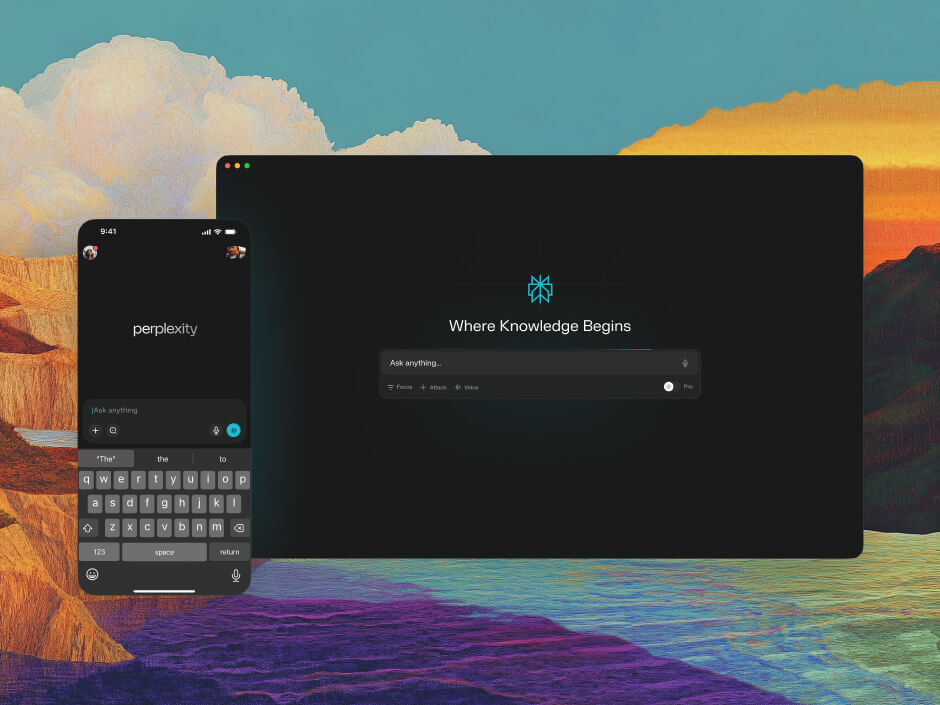

Perplexity is an AI-powered search and answer engine that helps people find information, explore ideas, and get direct answers to their questions. Its users range from consumers and students to professionals and enterprise administrators, each bringing different needs and expectations to the product.
As Perplexity has grown, so has the scale and complexity of supporting its users, with average daily support volume increasing 269% from last year. New products and capabilities bring more users and more questions, while customers increasingly expect immediate, high-quality answers regardless of when or where they reach out.
For Perplexity, the goal isn't simply to answer more support questions with AI. The team is working toward a concierge customer experience where every interaction feels like it was handled by someone who already understands the user's context, account history, and what they're trying to accomplish.
That means getting the answer right, using the right tone, resolving the issue on the first touch when possible, and knowing when a situation calls for human judgment.
From a shared inbox to an AI support operation
Perplexity initially handled support through a single channel through email. As the company grew, so did the volume and complexity.
Users increasingly expected near-immediate responses across time zones, while the team was simultaneously developing new policies and procedures to keep pace with a rapidly changing product.
The challenge wasn't simply handling more questions. Perplexity needed to determine which work could be handled consistently through automation and which work benefited from human judgment.
The team wanted AI to handle well-defined, policy-driven interactions quickly, while giving its human support team more capacity for escalations, incidents, enterprise billing, privacy requests, and other complex or sensitive cases.
“We wanted to be able to free our live team to focus on the unique use cases that an automation wouldn't be able to handle,” says Jennifer Palk-Cogley, Head of CX and User Operations at Perplexity.
Putting support operators in control of the AI experience
Perplexity chose Decagon with a specific operating model in mind: the people closest to customers should be able to shape how the AI agent behaves.
The foundation is Decagon's Agent Operating Procedures (AOPs), which allow Perplexity's team to build policies and workflows in natural language. Rather than relying on an engineering cycle to translate every change in policy into agent behavior, the support team can directly refine procedures, responses, tone, and escalation logic.
That changes the role of the support team. Instead of monitoring an AI system, operators can actively strategize and improve it based on what they're seeing from customers.
The team is using Duet to accelerate that process. When creating a new AOP, they can start with an existing policy document rather than a blank page. Duet helps turn that policy into an initial procedure that the team can review, tighten, test, and adapt.
“It was almost like Duet was pulling ideas from our head automatically, and it was just doing it instantly for us,” Jennifer says. “It acted more as a teammate, or an assistant, versus just us working alone.”
The same approach applies to existing procedures. Duet can surface gaps in an AOP that the team hadn't accounted for, giving teams another way to identify where a workflow needs to change before putting the updated procedure back into production.
For Perplexity’s support organization, that visibility is an important part of building trust in the agent.
“Duet has helped us build trust,” says Aléxis Camacho, User Operations at Perplexity. “It also highlights any edge cases, or particular areas where we may not have expected.”
From customer signals to action
Ownership also changes how Perplexity's team decides what to improve.
The team uses Decagon’s reporting to monitor user intent, escalations, and sentiment, looking for patterns that indicate where the team should focus. They can also use Duet to ask about deflection over a specific period and identify which AOPs are performing differently, giving them a quick view of where to prioritize their work.
That creates a tighter loop between what customers are experiencing and what the team changes in response.
When an issue emerges, the team can immediately investigate the relevant workflow, identify a gap, update the procedure, and test the change rather than waiting on an engineering ticket to translate the insight into an implementation.
The Decagon team has remained closely involved as well. Perplexity's support team describes the partnership as hands-on, particularly as they work through edge cases and continue learning the platform.
“The team has been very flexible in terms of helping us iterate, especially on any edge cases that we have, rather than just pointing us to documentation.” Jennifer says.
Measuring a more deliberate support model
Perplexity is seeing strong deflection as its support operation scales. Over the last 30 days, the team has achieved a 78% deflection rate while supporting 70+ user intents.
As demand grows, Perplexity’s support team can continuously improve Sage alongside the product, policies, and customer needs. That ability to shape the agent gives the team room to expand what Sage can handle as the support operation scales.
As Sage’s capabilities advance, Perplexity plans to build on deflection with broader measures such as CSAT, time saved, and ROI, creating a more complete view of the impact across both the customer experience and the support operation.
Building toward a concierge experience
For Perplexity, the ultimate goal is bigger than automating first-line support.
The team wants the AI agent, Sage, to resolve as much of the well-defined support experience as possible while making every interaction feel informed, clear, and human. When a conversation does require escalation, the goal is for the human agent to receive the context they need to resolve it without asking the user to start over.
That is the foundation of Perplexity's broader concierge vision: a support experience that understands the person behind the question, regardless of whether the interaction is handled by AI or a human.
In the near term, Perplexity is focused on refining its AOPs, improving escalation quality, and making the handoff between Sage and the human support team seamless. Over time, the team wants Sage to become the durable front door for the majority of well-defined support interactions, while its human team concentrates on the complex, high-stakes work where judgment matters most.
As Perplexity's user base and product continue to grow, the team is building an operating model that can scale with them: policies expressed clearly, workflows that can evolve quickly, quality that can be monitored continuously, and a customer experience that feels increasingly like a concierge rather than a support queue.

.png)
